There are two kinds of losses: the ones that cost you money… and the ones that cost you time, mental energy, and patience. That classic “Where did I leave my keys?” moment, the suitcase that never shows up on the baggage belt, the bike you park wondering if it’ll still be there later, or the car you remember leaving “somewhere around here” but not which exact street. And then there’s the serious scenario: theft, misplacement, or simply losing sight of something important when you’re in a rush.
Over the last few years, a lot of trackers have come out. Some are useful, but their range is limited. Others force you into subscriptions. And others sell you “GPS” when it’s really just Bluetooth with an attitude. That’s why I wanted to test the Qinux GoTag, a mini tracker designed to locate objects and vehicles in real time, with a very specific promise: insanely accurate, no subscriptions, and no distance limit thanks to a global network of devices.
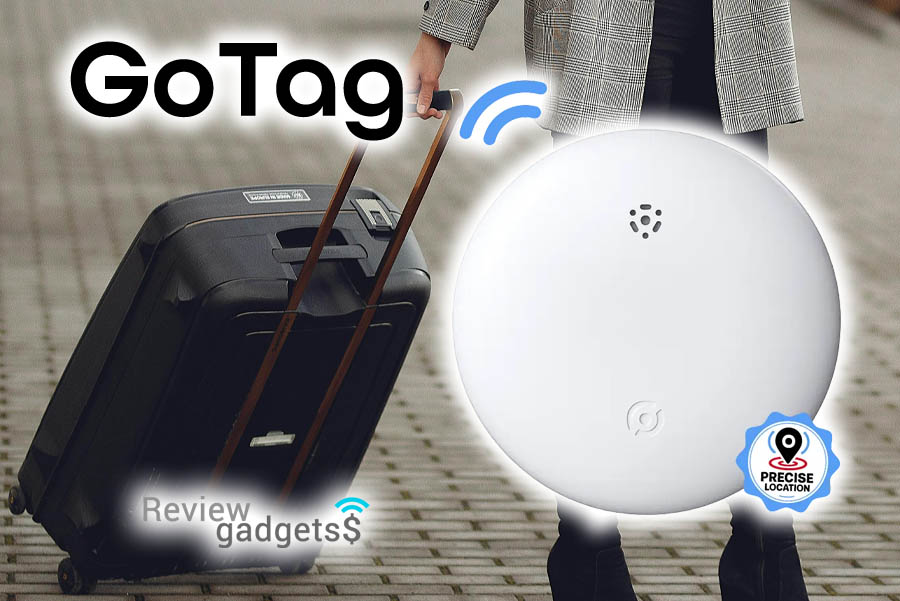
At first glance, it might look like “just another smart tag.” But after using it in real situations (car, keys, backpack, and suitcase), I can say the real difference isn’t only the size: it’s the sense of control. That “I know where it is” feeling that saves you arguments, pointless searching, and a ton of stress.
What exactly is the Qinux GoTag?
The Qinux GoTag is an ultra-compact portable tracker designed to help you find and keep an eye on the location of everyday items (keys, wallet, backpack, luggage) and also bigger things (bikes, scooters, car) as long as you place it discreetly.
The key is how it tracks: it doesn’t rely only on being a few meters away like classic Bluetooth tags. Instead, it leverages a global network of nearby devices (similar to “Find” networks in mobile ecosystems) to update location when the GoTag passes near compatible phones. That’s what makes the “no distance limit” claim true in a practical sense: even if you’re far away, if the tag is in a place with people moving around (streets, stations, malls, residential areas), its position is more likely to refresh.
And here’s an important clarification, because there’s a lot of confusion with this type of product: this is not a standalone GPS tracker with a SIM card. It’s not the kind of tracker that sends its location over mobile data every minute. What the GoTag does (like these modern trackers) is rely on a network. The advantage? No monthly fees. The downside? In totally isolated places with no phones around, location updates can be less frequent.
In real-world use, for most people, that trade-off is exactly what they want: useful tracking without paying every month.
Design and first impressions
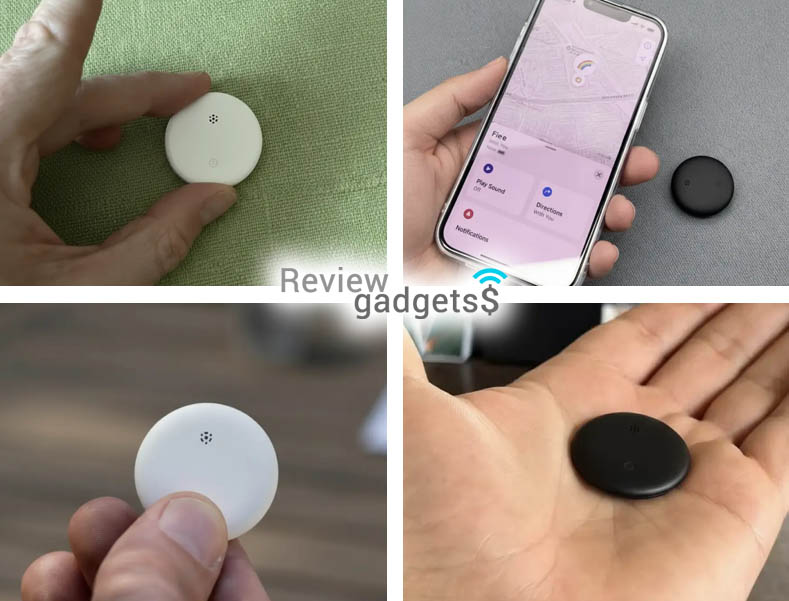
The first thing that surprises you is the size. It’s literally pocket-sized:
- 32 mm diameter
- 7.9 mm thickness
- 6.6 g weight
In your hand it feels slimmer than you’d expect, and that opens up a lot of use cases: wallet, keychain, backpack, an inner suitcase pocket, even a pet collar (always with a secure holder/case). It’s one of those devices you can hide well and that doesn’t “stick out,” which matters when the goal is to be invisible 24/7.
Another thing I liked is that it’s built for everyday life: it can handle outdoor use and tougher conditions (travel, rain, dust), and it doesn’t force you to install “weird apps.” The experience is basically “add it to your system” and you’re done.
Setup and daily use: what I did in the real world
This is where a product wins or loses. A tracker can look amazing on paper, but if pairing is a pain, you stop using it.
In my case, I set it up with Google Find Hub (Android’s location “hub”). Practical tip: if you buy several, don’t try to pair them all at once right after opening the box. Pair one, confirm it works, and then move on to the next. It sounds silly, but it prevents the classic “one connects and the other doesn’t” issue during initial setup.
Once it’s linked, day-to-day use is simple: open the hub, select the tag, and you’ll see location, status, and options.
My tests in 4 specific scenarios
1) Keys and wallet (the real-life test)
This is the most basic—and the most useful. The classic: you get home, put something “somewhere,” and then waste 10 minutes searching. Here the GoTag shines because of one key feature: making the tag ring from your phone. The sound is loud (it’s in the 100–105 dB range, so even under a cushion or inside a backpack, you can hear it). In practice, this turns a pointless search into 10 seconds of “oh, it was right there.”
2) Car in the city (the “which street was it?” stress)
If you park in similar-looking areas or come out of a mall, you know the feeling: you remember “around here,” but not the exact spot. On the map, the GoTag gives you a genuinely useful reference. Not only to remember where you left it, but also as an extra layer if something suspicious ever happens (unexpected movement).
3) Suitcase while traveling (the test nobody wants to run)
When you travel, the biggest value isn’t “finding something at home,” it’s reducing uncertainty: knowing whether your suitcase is with you, in transit, or somewhere else. Here the GoTag adds peace of mind: if the bag moves, you can see it; if it’s in an area with phones nearby, it’s more likely to update.
4) Bike / backpack (invisible security)
For a bike, the key is placing it discreetly: inside a bag, hidden in a compartment, or using a case. It doesn’t replace a good lock, but it adds something important: the ability to react. If it moves when it shouldn’t, you get a quick clue.
“No distance limit”: what it really means
Marketing tends to say it in absolute terms, so it’s worth explaining properly.
In real life, “no distance limit” means:
you can be miles away and still see the location as long as the tag crosses paths with devices in the network.
In other words, the limitation isn’t your distance—it’s the environment. The “busier” the place (streets, public transport, neighborhoods, stores), the more likely the tag is to update frequently. That’s a powerful model for items moving around in cities or during travel.
The good part: no subscription and no SIM.
The important part: set the right expectations (it’s not a standalone GPS).
Key features you actually notice
Find nearby with signal + sound
When you’re within wireless range, the hub shows an approximate signal, and with “Play Sound” you can locate it quickly. This is what you’ll use most day to day.
Lost Mode and privacy
If you lose an item, you can enable “mark as lost” and add contact details so whoever finds it can reach you. The process is encrypted and designed so only you control the location.
Share the tracker
Another useful option is sharing the tag with family members or trusted people: for example, shared luggage, car keys, a child’s backpack, etc. That way it doesn’t depend on “only my account.”
Price and deals
Right now, Qinux GoTag is available with a 50% discount as a launch offer: you can get one unit for just €49, down from its usual €98. If you want to protect multiple items or vehicles, the deal becomes even more appealing: two units cost €80 total, three units for €102, and five units for €155. That means the more units you add, the bigger your savings per tag—and the more complete your tracking setup becomes for keys, wallet, backpack, suitcase, bike, or car.
This pricing structure makes it easy to start with one for the essentials and expand coverage without overspending—or go straight for a larger bundle if you want to protect several things from day one.
Activate the 50% discount using this link
How to buy
- Check availability on the official website using this link.
- Choose how many GoTags you want (it always helps to think in real use cases: keys, wallet, backpack, luggage…).
- Enter your shipping details and select secure payment.
- Receive it and pair them one by one if you bought multiple.
Tip: if you buy bundles, mentally label each one from day one (“keys,” “wallet,” “suitcase”) so you don’t end up moving the same tag from item to item (and losing the whole point of the system).
Warranty, payments, and support
The product is sold with a clear focus: secure checkout, encrypted payments, and customer support for setup and questions. That matters because many trackers fail not because of hardware, but because of how they’re used or paired.
What other users say
The average rating is around 4.8/5, and the most repeated theme is “it reduces my stress” (which is basically the best KPI for a tracker).
Olivia Carter ★★★★☆ (4.5/5)
“I always forgot which street I’d left my car on—especially when I park quickly and I’m in a hurry. Since using this, I just open my phone and see the exact location. It sounds small, but it’s saved me time and that daily mini-stress that adds up. For me, that alone makes it worth it.”
Michael Rivera ★★★★☆ (4.7/5)
“My keys and wallet seemed to have a life of their own. You know the day you’re rushing out and you lose half the morning looking for them. With GoTag, if I can’t see them, I make the tag ring and that’s it. Literally seconds and I know where it is. One of the most useful things I’ve bought because I use it constantly—this isn’t a ‘cool gadget’ that ends up in a drawer.”
Daniel Thompson ★★★★★ (4.9/5)
“I put one on my daughter’s backpack for when she walks home from school. It’s not about spying or anything weird—just peace of mind: knowing she arrived, seeing where she is if there’s a delay, and avoiding scares. It gave me huge peace of mind. I set it up in five minutes and since then it’s just been another tool I rely on.”
Sarah Bennett ★★★★☆ (4.7/5)
“I work with my bike and I’ve already had a theft scare. I don’t want to go through that again. I keep it placed discreetly and if it moves when it shouldn’t, I’ll notice quickly. It doesn’t replace a good lock, but it gives you an advantage: reaction time. And that’s exactly what I wanted.”
Thomas Parker ★★★★☆ (4.8/5)
“My dog bolts if someone leaves the door open. It’s a nightmare. I put the tag on his collar and since then, if it happens, I can locate him much faster. It’s light and doesn’t bother him. For me this is pure peace of mind—especially in busy areas where one second of distraction can turn into a big problem.”
Emily Collins ★★★★☆ (4.6/5)
“I travel every week and once I lost my suitcase during a connection. Since then I never wanted to feel that helpless again. Now I can see where my luggage is at all times, and even though it’s not pure GPS, in busy places it’s updated well for me. It’s reduced a lot of travel anxiety.”
Activate the 50% discount using this link
Portability: truly small, truly useful
What makes the GoTag practical isn’t only that it’s small—it’s that it fits where it matters.
- It doesn’t get in the way in a wallet.
- It doesn’t bother you on a keychain.
- You don’t notice it in a backpack.
- It takes up virtually no space in luggage.
That sounds obvious, but it’s what separates the trackers you actually use from the ones you buy and then never feel like carrying.
Comparison: GoTag vs classic Bluetooth vs subscription GPS
I’ve tried three approaches at different times:
1) Classic “short-range” Bluetooth tags
Great at home, but not enough if you’re far away. If you lose something outside, sometimes they’re simply not helpful.
2) GPS with a SIM and a subscription
Very complete, but expensive in the long run. And usually bigger, more “bulky,” and requires more maintenance (fees, more demanding battery, etc.).
3) GoTag (global network + no subscription)
The balanced option: useful at short range (sound + nearby finding) and useful at long range thanks to the network—without monthly payments.
For most users, GoTag makes sense for a simple reason: one-time payment and peace of mind.
Frequently asked questions (FAQ)
Do I need to be close to the item to track it?
Not necessarily. To find it nearby (at home, the office, your car), you can use the “find nearby” feature and make it ring. But to locate it at a distance, GoTag relies on a global network of devices: if the tag passes near compatible phones, its location updates and you can see it even when you’re far away.
Do I have to pay monthly subscriptions?
No. One of the biggest strengths of the GoTag is that it works without fees or hidden charges. You pay once and use it.
Is this real GPS?
It’s important to understand: it’s not a standalone GPS tracker with a SIM that sends coordinates every minute over mobile data. It’s a tracker that benefits from a network of nearby devices to update location. That’s the approach that enables “no fees,” but it also means update frequency depends on the environment.
What happens if the item is in a very crowded place?
In general, crowded places tend to improve updates because there are more devices around. In city centers, stations, airports, or high-traffic areas, this type of network often works especially well.
Does it work outdoors and in the rain?
Yes, it’s designed for outdoor use and tougher conditions. Still, if you use it on a pet collar or a bike, it’s best to place it in a case or mount that protects it better from direct impact.
Is it actually small, or just “small in photos”?
It’s genuinely small: 32 mm in diameter, 7.9 mm thick, and 6.6 g. It fits in a wallet, on a keychain, in a backpack, or in an inner suitcase pocket without getting in the way.
Activate the 50% discount using this link
Can I use it in my car without it being noticeable?
Yes—because of its size, it’s easy to hide. Ideally, place it somewhere that isn’t obvious but also doesn’t “seal it in” too much, so it can communicate when devices are nearby.
Can it be shared with family members?
Yes, it has a tag-sharing feature, which is useful for shared keys, a family car, luggage, or backpacks.
What is “Lost Mode”?
When you mark a GoTag as lost, you can add contact info so someone who finds it can reach you. It’s a useful feature for “good-faith” lost items (suitcase, backpack, keys).
Is it loud enough to find it at home?
Yes. The sound is loud (approx. 100–105 dB). If it’s inside a bag, under clothes, or under a cushion, you’ll usually hear it without any problem.
Is it compatible with Android and iOS?
Here’s an important detail: these trackers often come in network-specific versions (Android/Google or Apple). The unit I tested works with Google Find Hub (Android). If you use an iPhone, make sure you choose the version compatible with your ecosystem before buying, because compatibility depends on the network the tag is designed for.
Conclusion: a mini tracker that saves you the chaos
The Qinux GoTag is one of those gadgets that proves its value in a couple of days: when you stop losing your keys, when you find your wallet in seconds, when you remember exactly where you parked, or when you travel with less luggage anxiety. It’s small, discreet, easy to integrate—and most importantly, it delivers a clear promise: peace of mind with no monthly fees.
If I had to define it in one sentence:
“Qinux GoTag is the mini tracker that turns ‘Where is it?’ into ‘Got it.’”