
In the United States, fuel costs are one of those expenses that can quietly eat into your monthly budget. One fill-up does not always feel dramatic, but after commuting to work, school runs, grocery trips, weekend drives, and the occasional road trip, the numbers start to add up fast. That is why small car gadgets that claim to help improve fuel efficiency always catch attention, especially when they do not require a mechanic, a subscription, or any permanent modification to the vehicle.
I normally approach these products with a healthy dose of skepticism. Over the years, I have tested several automotive accessories, from OBD2 readers and battery monitors to GPS trackers, dash cameras, and plug-in diagnostic tools. Some were genuinely useful. Others felt more like clever packaging than real value. SynGas falls into a category that many drivers are curious about: a compact OBD2 fuel-saving device designed to help the car run more efficiently by adapting to driving behavior over time.
What makes it interesting is not that it promises instant magic. In fact, that is exactly the wrong way to look at it. SynGas is better understood as a simple plug-and-drive accessory that may help optimize fuel use gradually, especially for drivers who spend enough time on the road to notice small changes in consumption.
After using it for several weeks across different driving conditions, including city streets, suburban roads, and longer highway routes, my impression is that SynGas is not for people expecting their gas bill to disappear overnight. But for regular drivers who want a low-effort way to potentially improve efficiency without touching the engine, it is a surprisingly easy device to live with.
What Is SynGas?
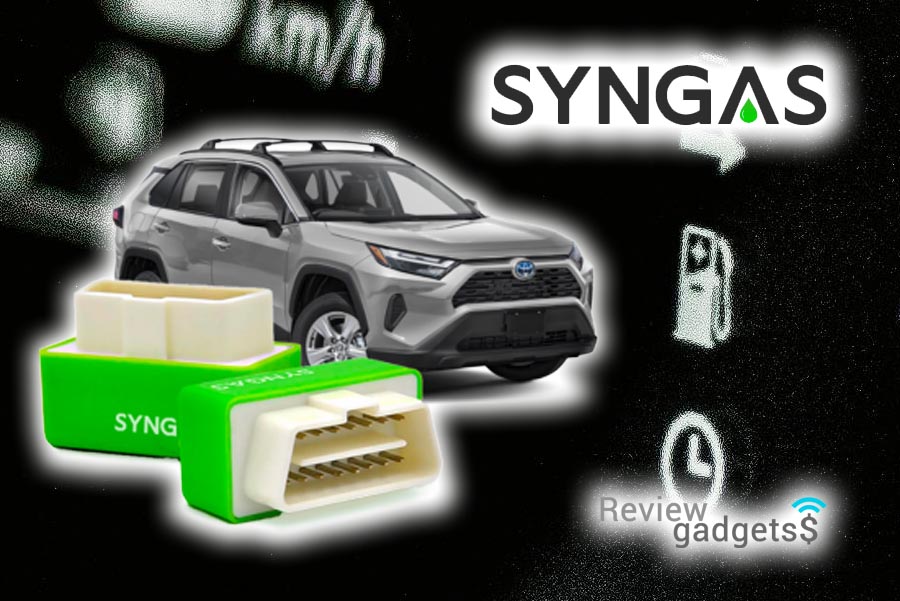
SynGas is a compact plug-in device that connects directly to your vehicle’s OBD2 port. This is the same diagnostic port commonly used by mechanics and scan tools to communicate with the car’s onboard computer system.
The basic idea is simple: you plug SynGas into the OBD2 port, drive normally, and allow the device to go through a calibration period. According to the brand, it may take around 150 miles of driving for the device to adapt to your usual driving patterns.
SynGas is promoted as a way to help reduce fuel consumption, support smoother vehicle response, and improve overall efficiency. It does not require professional installation, special tools, software updates, or mechanical knowledge. Once installed, it works quietly in the background.
That low-effort approach is probably its biggest appeal. Many drivers want to spend less on gas, but not everyone wants to study driving data, use complicated apps, or pay for expensive vehicle tuning. SynGas is aimed at people who prefer a simpler solution.
Design and Build Quality
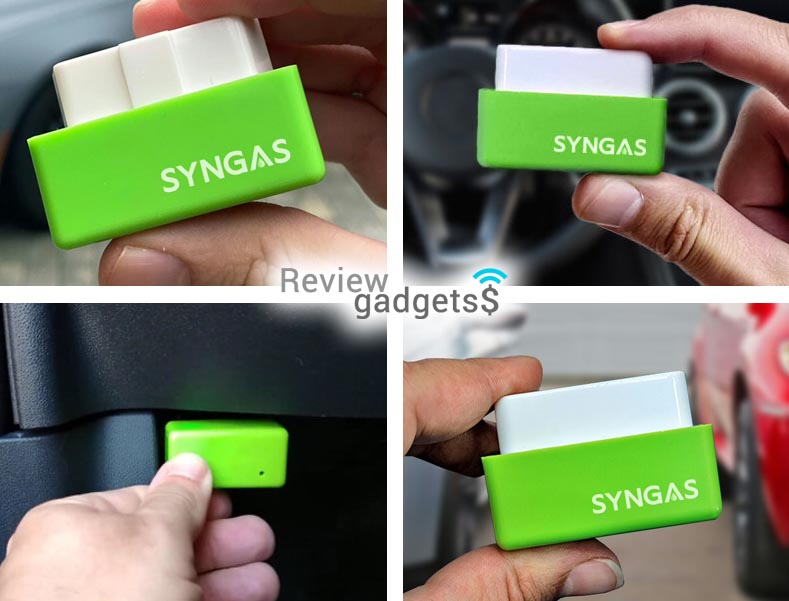
The first thing you notice about SynGas is how small it is. It is lightweight, discreet, and made from resistant ABS material. It does not take up space inside the cabin, and once it is connected, there is very little to think about.
This matters because an OBD2 device should never become annoying. It should not interfere with your legs, pedals, dashboard area, or regular driving position. SynGas keeps things simple: no dangling wires, no oversized screen, no complicated buttons, and no distracting display.
The connector felt firm during my test. It plugged into the OBD2 port securely and did not feel loose or unstable. In my case, installation took less than a minute once I found the port under the dashboard.
It does not feel like a luxury accessory, but that is not really the point. It feels like a practical car gadget designed to stay connected and remain unnoticed.
How SynGas Works With the OBD2 System
The OBD2 port acts as a communication gateway between diagnostic tools and the car’s internal systems. SynGas uses this connection to interact with vehicle data and, according to the manufacturer, support more efficient performance based on driving behavior.
It is important to understand what SynGas is and what it is not. It is not a full ECU remap. It is not a mechanical modification. It does not require opening the hood or replacing parts. It is an external plug-in device that can be removed whenever you want.
That reversibility is one of the reasons I was willing to test it. If you do not like the result, or if you want to return the vehicle to its previous state, you simply unplug it from the OBD2 port.
The brand explains that the device needs time to learn your driving patterns. This is why judging it after one short drive would not make much sense. The calibration period is part of the product’s logic.
Installation: A Simple Plug-and-Drive Setup
Installing SynGas is one of the easiest parts of the whole experience. You do not need to visit a mechanic or understand engine tuning. You only need to find your car’s OBD2 port.
In most vehicles, the OBD2 port is located under the steering wheel, near the fuse box, or somewhere in the lower dashboard area. Once you find it, you plug the device in and start the vehicle as usual.
There is no need to remove panels, connect wires, download an app, or make manual adjustments. During my test, I simply installed it and continued driving normally.
I tested SynGas in several everyday situations:
- Short city drives with traffic lights and stop-start movement.
- Suburban routes with smoother acceleration and fewer interruptions.
- Highway driving at more consistent speeds.
- Longer weekend trips where fuel consumption is easier to compare.
The device did not create any strange behavior. No dashboard warnings appeared, no error lights came on, and the car did not feel unstable. For any accessory connected to the OBD2 port, that is a key point.
The Calibration Period: Why Patience Matters
One thing I would not recommend is plugging in SynGas and expecting to judge it after five minutes. The manufacturer says the device may need around 150 miles to calibrate properly. That means the first few drives should be seen as a learning period.
During the first days, I did not try to force results. I drove as I normally would and watched the average fuel consumption over repeated routes. That is the only fair way to evaluate a product like this.
After several days, the effect seemed more noticeable on stable routes than in heavy traffic. On highways and smoother roads, consumption appeared more controlled. In dense city driving, the difference was harder to measure because constant braking, cold starts, and traffic conditions have a huge impact on fuel use.
That makes sense. No plug-in device can erase the basic physics of stop-and-go traffic. But when driving conditions are consistent, even a small improvement can become useful over time.
Can SynGas Really Reduce Fuel Consumption by Up to 55%?
This is the claim most people notice first, so it deserves a realistic answer.
SynGas is advertised with a strong promotional claim: it may help cut fuel consumption by up to 55%. That number sounds impressive, but real-world results will always depend on many factors: vehicle type, engine condition, driving habits, tire pressure, traffic, road type, load weight, and even weather.
I would not describe SynGas as a device that suddenly makes your car use half the fuel. That would be unrealistic for most drivers. A more sensible way to look at it is as an efficiency-support accessory that may help you get better results when combined with steady driving habits.
The product makes the most sense for people who drive often. If you only use your car once or twice a week for very short trips, the savings may be harder to notice. But if you commute daily, drive for work, or cover long distances every month, small efficiency improvements can become more meaningful.
In other words, SynGas does not need to achieve the maximum advertised figure to be useful. Even a modest reduction in fuel use can matter when repeated over weeks and months.
Driving Experience After Several Weeks
The biggest change I noticed was not a dramatic power boost. Instead, the car felt slightly smoother in certain conditions, especially when maintaining a steady speed. Acceleration felt a little more linear, though not in a way that completely changed the character of the vehicle.
On highway routes, the fuel average seemed easier to keep under control. On mixed roads, the results depended more on how consistently I drove. In city traffic, the effect was naturally less obvious because constant stops and starts make fuel use unpredictable.
What I appreciated most was that SynGas did not interfere with the car. It stayed connected, remained discreet, and did not require attention. There were no warning lights, strange noises, sudden changes, or signs that the vehicle was reacting badly to it.
For me, that is essential. A car gadget can promise a lot, but if it causes alerts or makes the vehicle behave strangely, it is not worth keeping. SynGas passed the basic reliability test during my use.
Where SynGas Makes the Most Sense
After testing it, I would say SynGas is best suited for three types of drivers.
First, daily commuters. If you drive to work every day, fuel expenses are not occasional; they are part of your routine. Any improvement in efficiency has more chances to accumulate.
Second, highway drivers. People who spend a lot of time on open roads or longer routes are more likely to notice consumption changes than someone who only drives short city distances.
Third, drivers who want a simple solution. SynGas does not require maintenance, refills, tuning appointments, or constant monitoring. You plug it in and let it do its job.
On the other hand, if your driving is mostly five-minute trips with a cold engine, traffic lights, and frequent stops, I would keep expectations moderate. In that scenario, fuel consumption is heavily influenced by conditions no accessory can fully control.
SynGas Compared With Other Fuel-Saving Options
There are several ways people try to reduce fuel costs. Some use fuel additives. Others rely on driving apps, tire pressure monitoring, vehicle servicing, or aftermarket devices.
Fuel additives can be useful in some situations, but they are consumable. Once they are gone, you have to buy more, and results can vary depending on the vehicle.
Eco-driving apps can help you become more aware of acceleration, braking, and route habits, but they require attention and are not ideal for everyone.
Mechanical tuning may offer more noticeable changes, but it is usually more expensive, more technical, and not always reversible in a simple way.
SynGas sits in a different place. It is not the most advanced or aggressive solution, but it is one of the easiest. You connect it once, allow it to calibrate, and continue driving normally.
That simplicity is the main reason it may appeal to regular drivers who want to reduce fuel costs without adding another complicated task to their routine.
No Maintenance, No Subscriptions, No Extra Work
One of the best things about SynGas is that it does not ask much from the user. There are no filters to replace, no liquids to refill, no monthly plans, and no routine cleaning.
Once connected and calibrated, it stays in place and works quietly. That makes it more convenient than products that require repeated purchases or constant interaction.
For drivers who already have enough expenses and maintenance tasks to think about, this low-maintenance design is a real advantage.
Current Price and Special Discount
SynGas is currently available with a limited-time 75% discount. With the promotion applied, the price is listed at just $39.99 instead of $79.98. The purchase also includes fast shipping and a 30-day money-back guarantee, which is useful because it gives you time to test the device in your own vehicle and under your normal driving conditions.
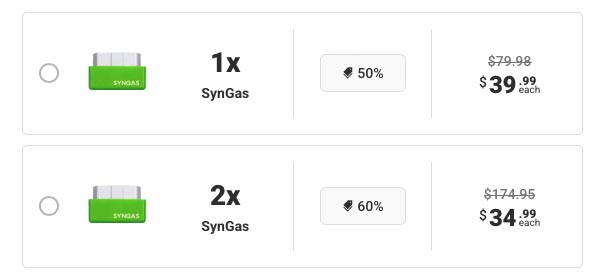
Given the current cost of fuel, the value argument is easy to understand. If you drive frequently and the device helps reduce even part of your fuel usage, it may pay for itself over time.
The discount also makes it more reasonable to try compared with expensive mechanical solutions or recurring fuel additives. Still, I would recommend buying only from the official website to avoid copies or unsupported versions.
Activate the 75% discount from this link
How to Order SynGas
Ordering SynGas is straightforward. You visit the official website, choose the number of units you want, enter your shipping details, and complete the purchase using the available secure payment options.
If you only have one vehicle, one unit is enough. If your household has multiple cars, or if you use a van or work vehicle regularly, bundle options may be worth checking.
Before ordering, it is a good idea to confirm that your vehicle has an OBD2 port. Most cars manufactured after 1996 include one, but checking your specific model is always the safest option.
I also recommend avoiding random third-party sellers. With plug-in car accessories, buying from the official source helps reduce the risk of receiving an imitation or a version without proper support.
30-Day Money-Back Guarantee
SynGas includes a 30-day money-back guarantee. This is important because fuel efficiency can vary from one vehicle to another. Two drivers using the same device may not get identical results if their cars, routes, and driving habits are different.
The guarantee gives you a window to test it in real conditions instead of making a decision based only on advertising claims. Customer support is also available for questions related to installation, compatibility, or use.
SynGas Reviews From Other Drivers
With more than 8,000 customers and an average rating of around 4.7/5, SynGas has attracted attention from drivers who want an easy way to manage fuel expenses.
Mark Henderson ★★★★★ (4.8/5)
“I drive about 40 miles a day for work, so fuel costs are not a small thing for me. I installed SynGas mostly out of curiosity, but after the calibration period my average consumption looked more stable. I would not say it cut my gas bill in half, but I do feel like I am filling up a little less often. For a daily commuter, that matters.”
Emily Carter ★★★★☆ (4.7/5)
“I liked that I did not have to install anything complicated. I found the OBD2 port, plugged it in, and that was it. The biggest difference for me has been on longer drives outside the city. The car feels smooth and I am paying more attention to how I drive. It is simple, but that is what I wanted.”
Jason Miller ★★★★★ (4.9/5)
“I was skeptical because I have seen a lot of fuel-saving gadgets online. SynGas seemed less risky because it is removable and came with a guarantee. I use it in my pickup, and after a couple of weeks I noticed better consistency on highway trips. No warning lights, no issues, and the vehicle still drives normally.”
Sarah Thompson ★★★★☆ (4.6/5)
“Most of my driving is school runs, errands, and weekend shopping. In heavy traffic the difference is not dramatic, but on repeated routes I started seeing slightly better numbers. I also like that there are no subscriptions or refills. It just stays plugged in.”
Brian Walker ★★★★★ (4.8/5)
“I use a van for deliveries, and fuel is part of my business costs. SynGas made the most sense on longer, repeated routes where I could compare consumption better. It is not magic, but it has been stable, easy to use, and helpful enough that I kept it installed.”
Rachel Adams ★★★★★ (4.9/5)
“We use our SUV constantly, and gas has become one of those expenses you really notice. SynGas was easy to install and did not change how the car feels in a bad way. Over a few weeks, the tank seemed to last longer on our usual drives. I mainly appreciate that it is low effort.”
Daniel Brooks ★★★★☆ (4.7/5)
“For highway travel, I noticed the best results. Around town, traffic makes it harder to tell. But on longer trips, especially when keeping a steady speed, the car felt more efficient. I would recommend giving it enough time before judging it.”
Olivia Bennett ★★★★☆ (4.6/5)
“I bought it because I wanted something simple, not another app or complicated device. The installation was very easy. I did not see a huge change in the first two days, but after more driving the fuel average became more consistent. It is a practical little gadget if you drive often.”
Activate the 75% discount from this link
Frequently Asked Questions
Does SynGas work with every car?
SynGas is designed for vehicles with an OBD2 port. Most cars manufactured after 1996 include one, but it is always smart to check your specific model before ordering.
Where do I plug SynGas in?
It connects to the OBD2 port, usually found under the steering wheel, near the fuse panel, or in the lower dashboard area.
How long does SynGas take to calibrate?
The brand recommends around 150 miles of normal driving for the device to adapt to your habits. It is better to evaluate it after several days rather than after one short trip.
Can SynGas really save up to 55% on fuel?
That is the maximum promotional claim. Real-world savings depend on the vehicle, driving style, route type, traffic, and overall condition of the car. A gradual improvement is more realistic than an instant dramatic change.
Is SynGas difficult to install?
No. You simply locate the OBD2 port, plug in SynGas, and drive as usual. No tools are needed.
Does SynGas permanently change the ECU?
No. SynGas is an external plug-in device. If you want to stop using it, you can unplug it from the OBD2 port.
Is it safe for the engine?
SynGas does not require mechanical changes or permanent reprogramming. During testing, it did not trigger warning lights or unusual behavior. If your vehicle shows any alert after installation, you should remove it and contact support or a mechanic.
Does it work better on highways or in the city?
Efficiency changes are usually easier to notice on stable routes such as highways or repeated commutes. In heavy city traffic, fuel consumption depends heavily on stop-start conditions.
Can I use one SynGas device in two different vehicles?
One device is intended for one vehicle at a time. If you want to use it in multiple cars regularly, having one unit per vehicle is more practical.
Does SynGas require maintenance?
No. There are no filters, refills, subscriptions, or manual updates required.
Will it drain my car battery?
The device has low power consumption. Still, if the vehicle will remain unused for a long period, unplugging it as a precaution is reasonable.
Can SynGas be used in diesel vehicles?
It is designed for a wide range of OBD2-compatible vehicles. Compatibility should be checked based on your specific model.
Is SynGas better than fuel additives?
They are different approaches. Fuel additives are consumable products that must be repurchased. SynGas is a reusable plug-in device for the vehicle.
Does SynGas increase horsepower?
The brand mentions improved performance and response. In real use, the difference feels more like smoother driving than a major horsepower increase.
Can I remove SynGas whenever I want?
Yes. You can unplug it from the OBD2 port at any time.
Is SynGas useful for delivery drivers?
Yes, it can be especially interesting for drivers who cover many miles every week, as small fuel savings may accumulate over time.
Does it come with a guarantee?
Yes. SynGas includes a 30-day money-back guarantee, so you can test it in your own vehicle and request a refund if it does not meet your expectations.
Should I buy SynGas from the official website?
Yes. Buying from the official website helps avoid imitations and ensures access to the current promotion, support, and guarantee.
Final Verdict: Is SynGas Worth Trying?
At the current promotional price with 75% off, SynGas offers a practical combination of features:
- Quick plug-and-drive installation.
- Wide OBD2 compatibility.
- No maintenance or refills.
- Compact and discreet design.
- Potential fuel savings over time.
- Removable and reversible use.
- 30-day money-back guarantee.
After testing it, I think SynGas makes the most sense for people who drive regularly and want a simple way to support more efficient fuel use without making complicated changes to the vehicle. Expectations should be realistic, but for commuters, highway drivers, and anyone watching fuel costs closely, it may be a useful little device.
“SynGas is a compact OBD2 device designed to help everyday drivers make every mile a little more efficient.”